Gas Chromatography
Exceptionally inert, GC-MS compatible GC columns and consumables for environmental, food safety, and energy sector testing labs.


Reliable separation in complex environmental and food matrices is one of the toughest hurdles in a modern testing lab — and the difficulty often starts upstream, at sample preparation steps like solid phase extraction. Peak tailing, column bleed, and weak sensitivity downstream don't just muddy the data; they slow down reporting and put trace-level results at risk.
GMICore's gas chromatography consumables are built on decades of proven method development, giving analytical chemists the resolution, efficiency, and reproducibility needed to quantify target analytes with confidence — run after run.
Trace-level detection requirements keep climbing, methylene chloride use is being phased out, and labs are moving toward lower extraction volumes and consolidated methods — all of which put more pressure on column sensitivity and inertness. Rxi-5Sil MS columns, built on TriMax deactivation technology, are our top recommendation for semivolatiles and pesticides work: they hold up to those tighter method demands with stronger sensitivity, more stable performance, and longer usable column life than older-generation phases.
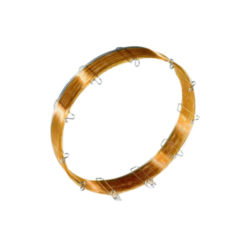
The MXT-WAX column swaps the usual fused silica tubing for Siltek-treated stainless steel, coated with the same Carbowax polyethylene glycol phase that gives standard WAX columns their oxidation resistance. That metal construction holds up far better against breakage, which matters in high-vibration environments or field-deployed GC setups. It covers the same general-purpose applications as standard WAX columns — FAMEs, flavor compounds, essential oils, amines, solvents, and xylene isomers, including EPA Method 603 testing for acrolein and acrylonitrile — across a 40 °C to 250 °C range.
The Rt-Q-BOND PLOT column is our equivalent: a 100% divinylbenzene porous polymer phase that delivers comparable separations for light hydrocarbons and volatile compounds. It's rated to 300 °C (max varies by dimension) and holds up consistently across methods for C1–C3 hydrocarbon analysis.