

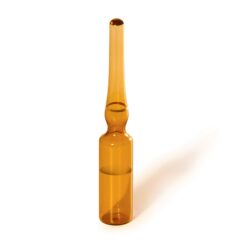
![Silylation Derivatization Reagent, MTBSTFA w/1% TBDMCS (N-Methyl-N[tert-Butyldimethylsilyl Trifluoroacetamide] w/1% tert-Butyldimethylchlorosilane), 10x1 g Vials, 10-pk.](https://supplies.gmi-inc.com/wp-content/uploads/2025/05/arm_vial_pack.jpg)
![Silylation Derivatization Reagent, MTBSTFA w/1% TBDMCS (N-Methyl-N[tert-Butyldimethylsilyl Trifluoroacetamide] w/1% tert-Butyldimethylchlorosilane), 10x1 g Vials, 10-pk. - Image 2](https://supplies.gmi-inc.com/wp-content/uploads/2025/05/arm_vial_pack_v2.jpg)


Silylation is the most widely used derivatization procedure for sample analysis by GC. In silylation, an active hydrogen is replaced by an alkylsilyl group such as trimethylsilyl (TMS) or tert-butyldimethylsilyl (tert-BDMS). Silyl derivatives are more volatile, less polar, and more thermally stable. As a result, GC separation is improved, and detection is enhanced.
Both TMS and tert-BDMS reagents are suitable for a wide variety of compounds and can be used for many GC applications. (Note that silylation reagents are generally moisture-sensitive and must be sealed to prevent deactivation.)
Features & Benefits
- Replace active hydrogen, reducing polarity and making the compounds more volatile.
- Increase stability of derivatives.
| Weight | 0.10 lbs |
|---|---|
| Dimensions | 0.75 × 3 × 7.50 in |
Related products
$785.00
Single-Component
MA VPH Surrogate Standard (2,5-Dibromotoluene), 10,000 µg/mL, P&T Methanol, 1 mL/ampul
$35.50